Blurred Vision
I had tried to get a real ID before we left Ohio a year ago. On a free Saturday morning—rare for a headmistress in the spring--I drove from Shaker Heights to Erie, PA, about an hour from our home. At the end of June, we were moving to Pennsylvania, so it made sense to have a driver’s license and real ID from the state where we’d live, once I retired from headmistress-ing. I clutched the envelope my husband had prepared, then presented it proudly to the woman at the desk.
“Social security card?” she barked.
“There’s a picture of it,” I said.
“No good,” she answered. “Has to be the real thing.” Her eyes were steely. No smile. No flexibility.
I couldn’t believe it. Now, I would need to fly—to NYC, then to Montana for our daughter’s wedding—with my passport. Not the end of the world, but annoying.
As I stepped out of the door of the DMV, the heavens opened, and I was a cold and sodden ball of rage by the time I reached my car. It hadn’t even occurred to me that it might rain. I grumbled all the way back to Cleveland, blasting the heat and the seat warmers, mad that I had not double-checked what I needed, mad at the weather, mad at needing a real ID in the first place because it felt like one more step towards authoritarianism.
The school year ended. We moved. I flew, uneventfully, passport in hand. But after the Fourth of July, settled in Pennsylvania, my son and husband and I trekked to the license bureau in Williamsport, about 45 minutes away.
My son fumed because he would turn 21 in a few weeks, but they would not give him a horizontal license until his actual birthday. His “junior” license would expire before he could get back to PA from NYC where he was spending the summer.
“Don’t drive,” I said.
“Mom, I won’t,” he scowled.
This time, I had all the right documents and congratulated myself on being prepared.
“Okay, put your chin on the monitor and read the columns,” the lady in a booth instructed me.
With confidence, I read the letters: B, S, R, C—M L, D, P.—N, O, Z, 3.”
“And the last column?” she asked.
“There isn’t another column,” I said, calm, certain. I’ve always been proud of having great vision—readers after I turned 45, but no real glasses, ever.
“There is.”
I squinted, closing one eye and then the other. No letters. I felt a little panicked. I’d retired, moved, joyfully celebrated our daughter’s wedding, and now I was going blind?
“I can’t give you a license if you can’t see,” she explained, as resolute as her colleague in Erie had been. She printed a new form for me and told me to have an eye doctor fill it out before I returned.
All the way home, I covered my left eye, then my right, trying to see what I could not see.
In NYC a week later, our daughter, the bride, suggested we go to Warby Parker.
“They do eye exams, Mom. Maybe they can tell you what’s going on.”
I had always been vain about my excellent eyesight, my size 6 shoe size, and my cell phone’s Manhattan area code. Now, my eyes had betrayed me, following my puffy feet into old age. Fortunately, my 212 area code remained faithful.
An older optometrist greeted me. By older, I realized I meant he seemed to be my age. I trusted him on sight. He was calm and matter-of-fact, and I poured my worry into his kind face.
“When’s the last time you had an eye exam?”
I couldn’t remember.
“Before Covid?” he prompted.
Maybel.
“Okay. Let’s see what’s going on?”
I put my chin on the shelf of the monitor and read letters, obedient, hesitant.
He played with magnification; sometimes the letters were clearer, sometimes harder to discern.
“In New York, you wouldn’t even need glasses” he explained because your left eye is perfect, but you have lost some vision in your right eye.” I showed him the form from the license folks.
“I see,” he muttered. “In Pennsylvania, you’ll need to wear glasses when you drive,” he explained. “And you probably need an eye doctor who will follow you now. You are over 60.”
In case I had forgotten.
In quick order, he printed a blank form from the Pennsylvania Department of Transportation and filled it out, writing me a prescription and reminding me to keep the glasses in the car with me to wear when I drove, ideally, and to be sure to put them on, should I be pulled over.
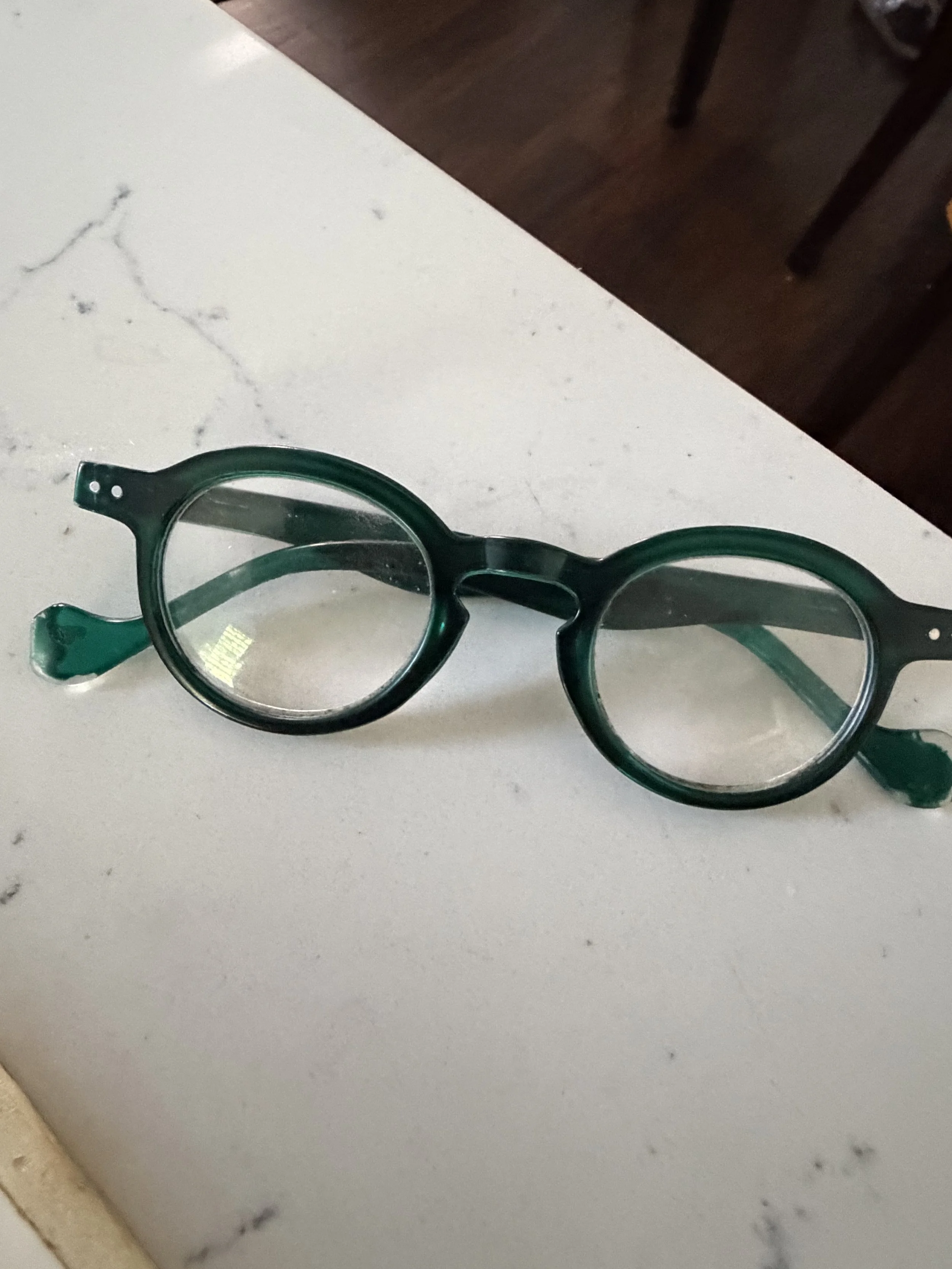
While I was having my exam, my daughter and the sales staff had pulled frames that resembled my current readers. I liked the first pair I tried and then got a back-up pair and a pair of sunglasses.
Several hundred dollars later—poor vision not cheap, it seems--the order was placed.
After our son turned 21, we went back to Williamsport. This time, the gentleman fussed at our son for the legitimacy of our boy’s two addresses. It’s hard to have mail addressed to you when you moved less than a month ago. Ultimately, he agreed to accept the documents, but he was clearly irritated.
I exhaled. Our son, now a legal adult, got his horizontal license.
When it was my turn, I felt anxious. Would my new glasses be enough? Would I see the fourth column? What if I couldn’t ever get a real ID? The woman who called me to her cubicle shuffled papers, more papers, it seemed, than my son’s person had shuffled. Perhaps this was her first day on the job? Around her window she had inspirational sayings, all of which I have forgotten. I was tense.
“Okay, wait on those chairs,” she instructed.
“That’s it?” I asked, bleated, happy that I did not have to do another eye test.
“Well, if you want to get your ID, you need a photo,” she said, not unkindly.
I smiled, nodded, and went to sit next to my son. The line snaked out the door—apparently, a lot of people in Pennsylvania needed licenses or real ID’s.
Okay?” my boy asked. “I look good in my photo, don’t I?”
He did, in fact, look great. Once I received my own Real ID, I thought I looked like Dolores Umbridge from the Harry Potter series, malevolent and unattractive—why hadn’t I combed my hair or smiled?
We left the room full of linoleum and molded plastic chairs and the hum of disgruntled people in search of the tiny plastic cards that would allow them to operate vehicles or claim that they were who they said they were.
We drove back up the mountain, my son at the wheel, my eyes glad not to be wearing the new glasses, which made everything look blurry, one more irony in this long quest.
Our eyes are precious. When allergies tempted me to rub my eyes each spring, my mother would admonish me, “Stop that! You only get one set of eyes, Ann.” To be able to see colors, to read, to enjoy the beauty of the natural world, to observe the faces of people I love—what a gift. I am grateful for that kind optometrist; grateful, too, for the cataract surgery in January on my right eye that restored my sight almost completely. I don’t need to wear the overpriced fancy glasses anymore. I had them converted back to readers! Blurred vision. What a metaphor for this new chapter. I had been so confident that I could see always see clearly—whether reading an eye chart or leading a school. It was unsettling to realize long-held truths might be wobbly. Fretting about my eyes all fall led me me to consider assumptions about my leadership and about my identity—a very useful exercise, even if unsettling. I’ve come out the other side with restored sight and new humility.